
Bot-enabled?
A 2016 note on what bots will demand from your content. Nine years later, the demand turned out to be exactly what was predicted: structured, modular, tagged.
Originally written by Steffen Frederiksen, December 2016. Lightly refreshed in 2026, the substance has aged unexpectedly well.
This year at the LavaCon conference in Las Vegas, I followed some very exciting presentations about the very near future role of bots, software robots and intelligent agents, in our efforts to bring exactly the right piece of content to the right person, at the right time.
What the bot presentations kept coming back to
Current prominent bot examples are Microsoft’s Azure Bot Service and IBM’s Watson Virtual Agent.
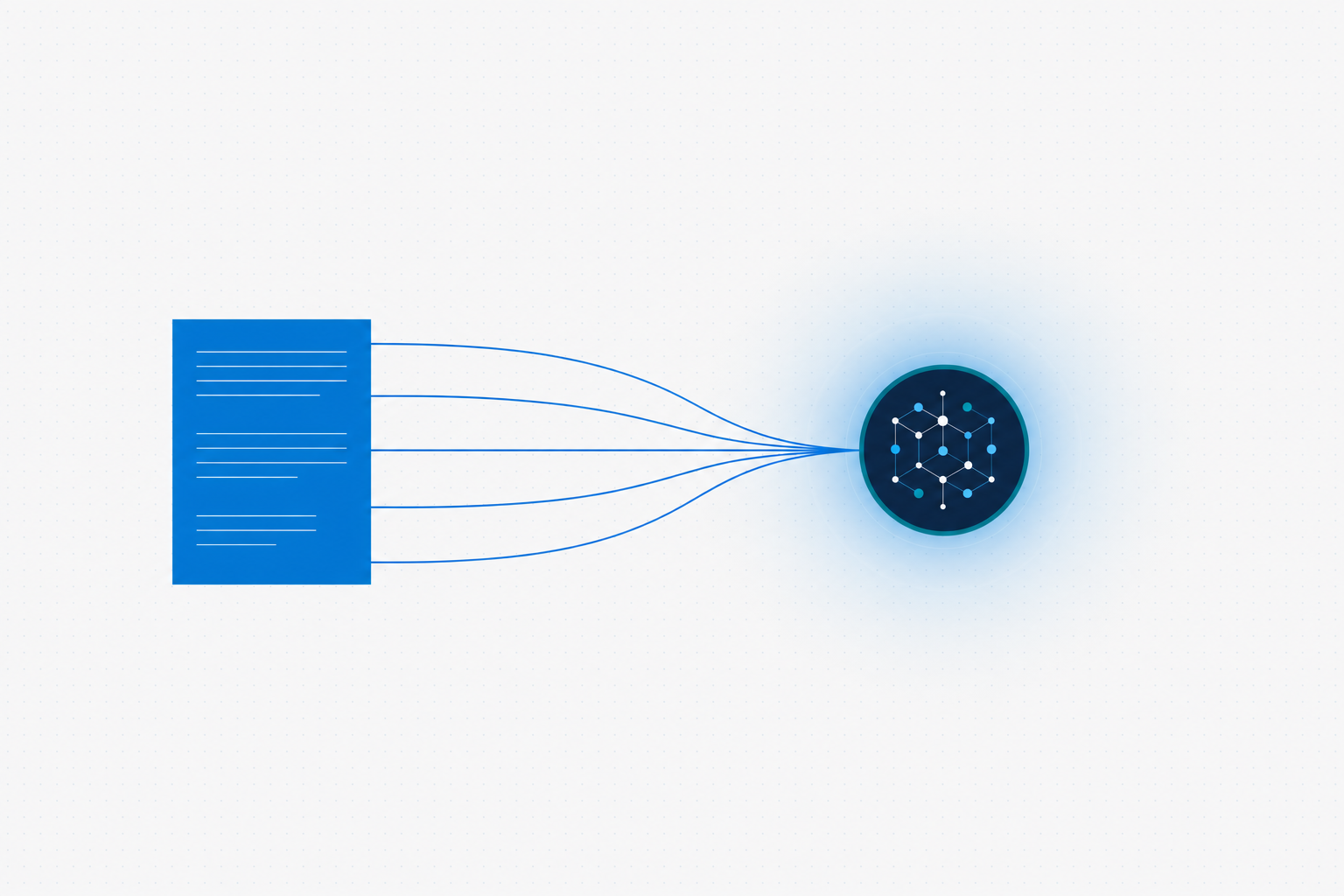
Several presentations also made the same observation: bots need access to enormous amounts of rich, structured, modular content that is tagged with metadata. In other words, bots feed on rich structured content and they just cannot get enough of it.
So if you want to have bots help your users, you had better get started improving your content by making it modular (one question, one answer, one topic), taggable with rich structured metadata, and machine-readable. The more structure and metadata you add to your content, the further away from the wastebasket it gets.
The intranet is the final resting place
In many companies, the intranet is the wastebasket, the final resting place for content with no structure and no metadata. Not even the author can find it again. Adding metadata and structure can transform the content, making it searchable, findable, and eventually “bottable”.
Good luck bot-enabling your content.
What bot-enabled content turned out to require
The 2016 note got the principle right but not the scale. The systems that read content in 2026 are large language models and retrieval-augmented generation pipelines, and they are far less forgiving of a messy content estate than the keyword search of a decade ago. A retrieval system can find an approximately relevant passage in almost any corpus. What it cannot do, on its own, is tell whether that passage is the approved version, the current one, or the one a regulator would accept.
That gap is what structure closes. A component carries its own metadata: source, version, approval status, topic type. When a model retrieves it, the answer is grounded in a unit that is addressable and carries its provenance, not a paragraph lifted from a PDF whose status nobody can confirm. In regulated settings the difference is not cosmetic. An assistant that cites superseded guidance is worse than one that finds nothing, because it answers with confidence and leaves no trail.
DitaExchange treats the problem at the source rather than at retrieval. DxChecker enforces terminology, metadata and cross-reference rules on the content before anything reads it, so the corpus an assistant draws on is consistent before the question is asked. The components live in the SharePoint estate the organization already runs, under the identity and audit controls already in force. Nine years on, the instruction is unchanged, with higher stakes: structure and tag content at the source, in the DITA model, or the bot answers from whatever it can find.
Frequently asked questions
Why republish a 2016 post about bots in 2026?
Because the prediction held. In 2016 the bots were Microsoft Azure Bot Service and IBM Watson; in 2026 they are GPT-class LLMs, agentic AI assistants, and RAG-powered help systems. The architectural requirement is the same: these systems can only answer well if the underlying content is structured, modular, and tagged. Most enterprise content estates in 2026 still treat AI assistants as a search problem rather than a content-architecture problem, and the result is the same as it was in 2016: the bot cannot find anything useful in unstructured PDFs and Word files.
What does 'bot-enabled content' mean in practice?
Content that is modular (small, addressable units rather than long documents), structured (consistent shapes that the bot can parse without guessing), and tagged with rich metadata (so the bot can filter, route, and cite). For LLM and RAG systems specifically, this means content authored as DITA topics or equivalent structured fragments, with consistent metadata for source, version, approval status, and topic type.
Is this still a content-management problem in 2026?
Yes. Vector embeddings and modern retrieval systems have made it easier to find approximately-relevant content in unstructured corpora, but the failure mode is the same as it was in 2016: the bot returns text that looks plausible but is the wrong version, contradicts the latest update, or comes from a source the regulator does not accept. Structured content management at the source is still the only way to give the bot answers that can survive an audit.