Nuclear & energy

The asset outlives the documentation system. Plan for that

Nuclear and energy infrastructure runs on multi-decade lifecycles. A plant licensed today will be producing power, and regulatory records, for 40 or 50 years. The structural question is not which CCMS to pick today. It is how to keep the content portable across the next four.

A wide view of an energy-sector facility: a single inspector in safety equipment walks an elevated inspection platform viewed from behind, with a modern power-generation installation in the background under cool late-afternoon light.
ApprovedComponent v3
68% Reuse rate
The structural problem

The highest documentation bar in any sector

Nuclear safety regulation is in a category of its own. A single Safety Analysis Report runs to tens of thousands of pages, traceable across a 60 to 80 year asset lifecycle, with a decommissioning record that stays auditable for decades after operations end.

Energy regulation sits alongside it: wholesale markets, grid codes, network access, renewables. One interconnector specification can apply in four national grid codes at once, with a national, a regional (EU, NERC) and often an international authority above it.


Regulatory landscape by region

Nuclear has its own regulator in every jurisdiction. Energy markets sit alongside

Every country with a civil nuclear program runs a dedicated nuclear safety regulator, separate from its energy regulator: CNSC and CER in Canada, NRC and FERC in the US, ONR and Ofgem in the UK, ASNR and CRE in France, ENSI and ElCom in Switzerland. The long-horizon retrievability expectation is universal.

North America

US · Canada
  • CNSC, Canadian Nuclear Safety Commission. Federal regulator for the use of nuclear energy and materials.
  • NRC, US Nuclear Regulatory Commission. 10 CFR licensing framework; technical specifications and safety analysis reports.
  • CER, Canada Energy Regulator. Federal oversight of inter-provincial energy infrastructure, separate from CNSC.
  • FERC, Federal Energy Regulatory Commission. Wholesale energy markets, interstate transmission, hydroelectric licensing.
  • NERC & PHMSA, bulk-power reliability standards and pipeline safety documentation.

Western Europe

EU institutions · FR · BE · NL · IT · ES · PT
  • IAEA safety standards, International Atomic Energy Agency. Reference framework adopted by national authorities across W. Europe.
  • Euratom Treaty: cooperation framework on nuclear safety, safeguards, and waste management across the EU.
  • ASNR, French Autorité de sûreté nucléaire et de radioprotection (the merged successor to ASN and IRSN, since January 2025). Independent nuclear safety and radiation-protection regulator; among the most active in Europe.
  • EU Energy package directives, Clean Energy Package, REPowerEU. Drive disclosure and capacity-market documentation.
  • ENTSO-E / ACER, European Networks of TSOs and the Agency for the Cooperation of Energy Regulators. Grid-code coordination.

DACH

Germany · Austria · Switzerland
  • ENSI, Swiss Federal Nuclear Safety Inspectorate. Independent oversight of Swiss nuclear installations through to decommissioning.
  • Atomgesetz / BMUV, German Nuclear Act and the Federal Ministry for the Environment. Post-2022 phase-out shifted regulatory focus heavily toward decommissioning and waste management documentation.
  • BNetzA, German Federal Network Agency. Energy, telecoms, post, rail regulation.
  • StromVG / ElCom, Swiss Federal Electricity Supply Act and the Swiss Federal Electricity Commission.

UK & Nordics

UK · DK · NO · SE · FI
  • ONR, UK Office for Nuclear Regulation. Independent statutory regulator for nuclear safety, security, and conventional health and safety on licensed sites.
  • SSM & STUK, Strålsäkerhetsmyndigheten (Sweden) and the Finnish Radiation and Nuclear Safety Authority. STUK is among the most documentation-intensive regulators in Europe.
  • DSA, Norwegian Direktoratet for strålevern og atomsikkerhet.
  • Ofgem, UK Office of Gas and Electricity Markets. Sector regulator across price controls, network access, retail conduct.
  • TSOs: NESO (UK, formerly National Grid ESO), Energinet (DK), Statnett (NO), Svenska kraftnät (SE), Fingrid (FI). Grid-code documentation across the synchronous areas.
How DitaExchange addresses it

Components that survive the system that recorded them

DitaExchange manages content as DITA components inside Microsoft SharePoint. Components are the unit of reuse and the unit of audit; documents are assembled views. Measured against the IAEA framework, the strictest content-traceability regime in any regulated sector, that distinction is the whole argument.

What changesHow
The component becomes the unit of audit Version history, author and approval sit on the fragment, not on the multi-volume report that contains it.
Content stays portable across platform generations DITA is a standardized XML format. Content authored in 2026 is readable by any DITA-compliant tool in 2046, without re-keying, because the storage format is open and the structure explicit.
Periodic safety review stops being a re-write Safety Analysis Report volumes are reassembled from approved components at each review and license renewal rather than re-derived by hand.
One specification serves four national grid codes Conditional profiling emits national variants at publish time from a single approved technical specification.
Access control and audit trail stay in the existing estate The SharePoint substrate carries the posture nuclear operators and energy regulators already maintain for the rest of their IT.
In production

The content domains in scope

The content domains DitaExchange addresses in this sector, from regulator rule corpora to decommissioning records written for readers decades away.

Nuclear regulatory rule sets

Safety regulations, license-condition frameworks, transport regulations. Editorial workflow with full version history; downstream re-publication in regulator-format outputs.

Safety Analysis Reports and licensing documentation

Multi-volume documents reused across periodic safety reviews and license renewals.

Operating and maintenance procedures

Component-level reuse across procedure families, with controlled-language constraints where applicable.

Decommissioning records

Long-horizon documentation with reference to original commissioning content. Built for traceability across the asset lifecycle.

Grid-code and network-code documentation

Shared technical specifications across TSOs and DSOs with national-variant assembly.

Long-term content survives platform migrations because DITA is portable and SharePoint exports cleanly.

Where the audit trail is the deliverable

Plant manuals, safety cases and decommissioning records outlive the people who wrote them. Component-level version history answers who approved a statement, and when, without reconstructing it decades later.

See the regulatory-affairs view
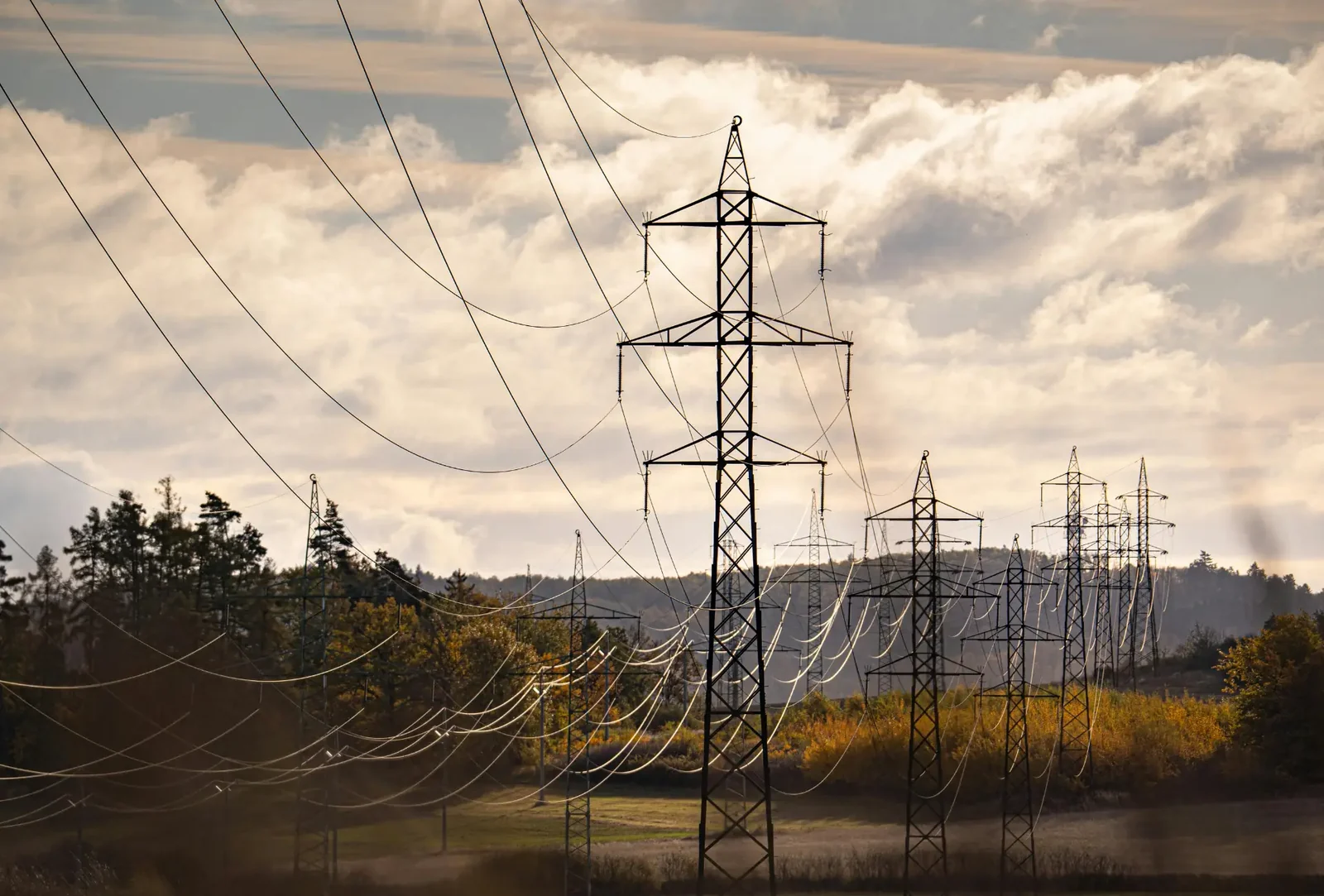
An industrial energy environment of the kind plant and safety documentation describes

Frequently asked questions

NERC reliability standards and the NRC 10 CFR framework both ask an operator to evidence the approved procedure behind an action. What does that require of the content?

Retrieval at the level the requirement is written at. A requirement bites on a step, a limit or a condition, not on the manual containing it, so approval and change history have to sit at that level too. Where they sit on the volume instead, every response starts by working out which revision a step came from, and that is the part which does not fit the response window.

The engineer who wrote a safety-case statement retired fifteen years ago. What does the system actually preserve?

Who approved the wording, when, and against which version of the rule. What it does not preserve on its own is why they were satisfied. Where that reasoning matters at the next periodic safety review, it has to be written down as content and approved like anything else. A version history is evidence of a decision, not a substitute for recording the basis of one.

In forty years we will not be running today's tools. What leaves with the content?

DITA XML, defined by an open OASIS standard rather than by a vendor schema, held in storage the organization administers itself. Treat that as an answer to test rather than to accept: ask every platform on the shortlist what an export contains, whether the structure survives it, and who has to still be in business for the content to stay readable. Ask us the same question.

Our safety-case estate runs on an accredited platform that is not Microsoft. Should we be looking at this at all?

Honestly, no. The architecture assumes a Microsoft estate already in production, and without one it asks an organization to take on a platform commitment in order to get a content capability. Heretto, Paligo or Bluestream are more direct fits in that situation. Reaching that conclusion in week one of an evaluation costs everyone less than reaching it in month three of an implementation.

Should controlled language be applied to operating procedures?

Rule sets can hold approved terminology, sentence discipline and required metadata at authoring time, and for procedures carried out under time pressure that consistency is worth having. What a rule set cannot judge is whether the step itself is correct or safe. That stays with the technical review the license requires. Automated checking clears the arguments about wording so the review can spend its time on the engineering.

Plan the content lifecycle to match the asset lifecycle

Implementations start where the documentation will live longest: a licensing dossier, a safety analysis report, a grid-code corpus. Components survive system migrations; documents do not.